
NEW NULLA BAR FLAVORS
In-Stock Now!

Best overall: regular whey for everyday protein intake. Best for tighter macro control: whey isolate. Best for a fruity shake: clear whey isolate. This 2026 Tigerfitness guide explains when each option earns a place in your nutrition plan—and when switching serves no clear purpose.
Buying protein gets confusing when a processing term sounds like a promise of better gains. Whey isolate is more filtered than whey concentrate, but that distinction does not automatically make isolate the better choice for your workouts.
Both supply complete protein. Your decision comes down to the finished formula, your digestion, and the amount of protein you need to add to your diet.
For your 2026 supplement plan, start with a practical question: What problem would switching protein powders solve? If your current shake agrees with you and fits your nutrition targets, the word isolate alone is not a reason to change.
Use these criteria before choosing a category or comparing tubs:
These criteria keep the 2026 comparison focused on useful differences. A category name tells you where to start, but the ingredient list and nutrition panel determine whether a specific product fits.
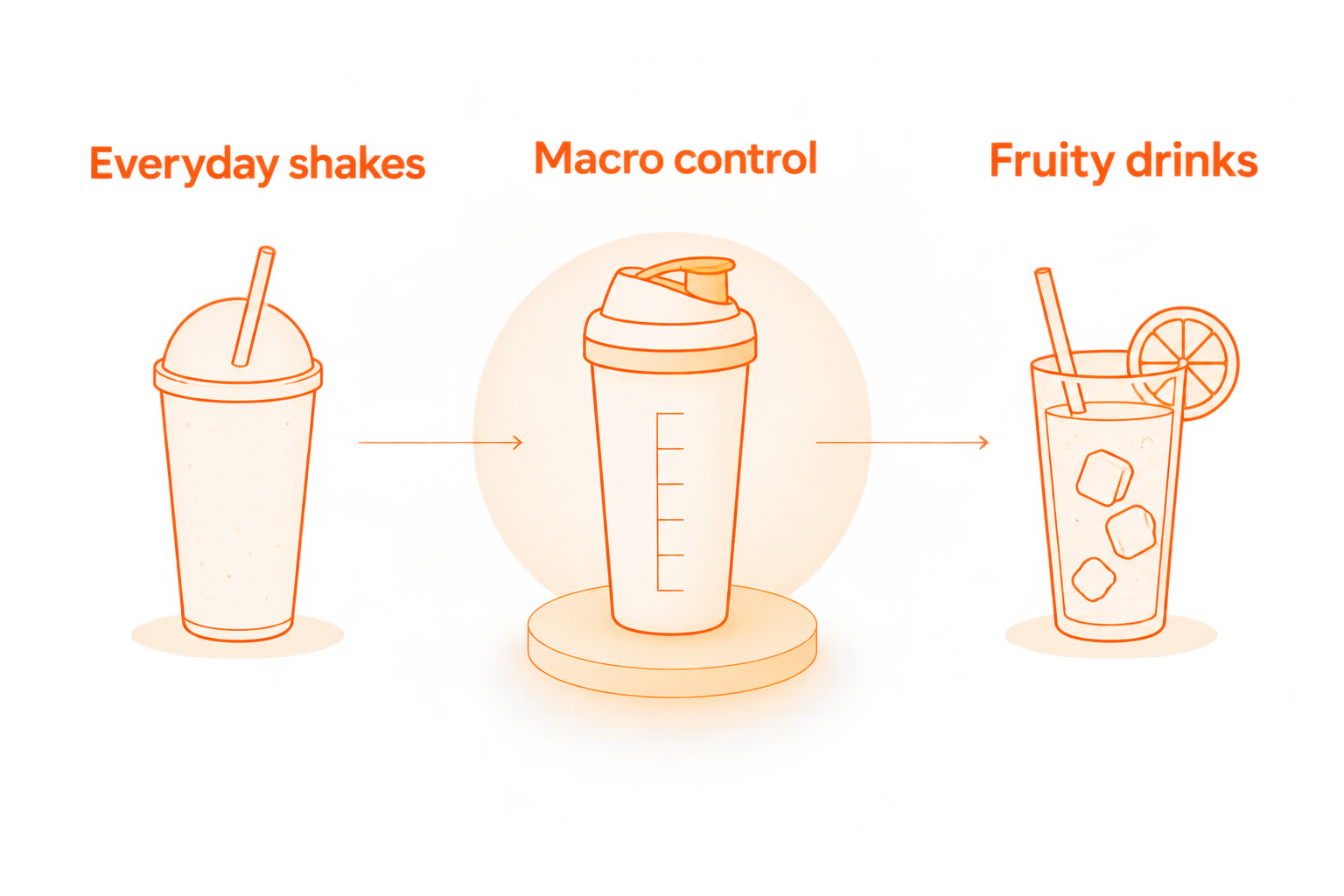
| Ranked option | Best for | Standout feature | Product example | Key limitation |
|---|---|---|---|---|
| Regular whey blend | Everyday shakes | Familiar whey format for filling protein gaps | Machine Whey Protein | Blend composition and finished macros vary |
| Whey isolate | Macro control | Additional filtration removes more nonprotein components | RAW Grass Fed Isolate Protein | Isolate is not automatically lactose-free |
| Clear whey isolate | Fruity drinks | Alternative to a traditional creamy shake | Animal Clear Whey Isolate | Still contains milk protein |
The ranking separates buying situations, not muscle-building potential. Clear whey isolate belongs to the isolate category; it gets a separate slot because drink preference is a different buying decision from macro control.
Regular whey is the default when you want help meeting your protein needs and tolerate dairy. In this guide, regular whey means a whey concentrate product or a conventional whey blend—not a separate scientific category.
A blend can include concentrate and isolate. Do not assume that a tub without isolate in its name contains no isolate, or that a blend tells you the proportions of its ingredients.
Machine Whey Protein is described as a whey protein blend. That makes it a relevant everyday-shake example, without establishing an exact concentrate-to-isolate ratio or a specific nutrient profile.
Best for: Lifters who tolerate their current whey and want a straightforward daily supplement.
Your first purchase should solve a protein gap, not create a more complicated routine. Start by checking how much protein you already get from meals, then choose a serving that fills the remaining gap.
Verdict: Buy regular whey if digestion and the nutrition panel already work for you.
Whey isolate undergoes additional processing to remove more lactose, fat, and other nonprotein components. That gives you a reason to compare isolates when a regular whey formula does not fit your requirements.
The finished shake still matters. Flavorings and other ingredients contribute to the nutrition panel, so isolate on the front label is not a guarantee of zero carbohydrates or zero fat.
RAW Grass Fed Isolate Protein is a relevant example: its product description states 25 grams of protein per scoop. That figure describes the named product, not every isolate or every scoop across the category.
Best for: Lifters whose label comparison identifies a meaningful carbohydrate, fat, or lactose advantage.
During a 2026 cut, compare the actual nutrition panels before changing products. If both formulas fit your targets, isolate is not a requirement simply because you are trying to lose body fat.
Verdict: Buy whey isolate when its finished formula solves a specific nutrition or tolerance problem.
Clear whey isolate changes the drinking experience rather than creating a separate class of muscle-building protein. Choose it when a juice-like shake sounds more appealing than a traditional creamy option.
Animal Clear Whey Isolate is described as a juice-like alternative with 20 grams of whey isolate protein and 5 grams of BCAAs. The BCAAs are part of the protein's amino acid content; do not add those figures together as separate protein totals.
Best for: Lifters who want whey protein but dislike traditional shake formats.
Do not confuse clear whey with a plant-based drink. The word clear describes the format, not the source of the protein or its suitability for a milk allergy.
Verdict: Buy clear whey isolate for drink preference, not an expectation of better gains.
Tigerfitness carries whey blends and isolates, including the examples below. Match the category to your reason for buying, then check the current product label for your selected flavor and serving.

Look for whey protein concentrate, whey protein isolate, or a combination. If casein or another protein appears, you are comparing a broader protein blend rather than just concentrate against isolate.
Ingredients appear in descending order by weight under U.S. food-labeling rules. That establishes their order, not their exact percentages; an isolate-first blend is not necessarily an isolate-only product.
A scoop is a measuring tool, not a standardized protein dose. Compare the stated serving weight and grams of protein before deciding which powder is more concentrated.
Keep the selected flavor consistent with the label you read. Do not transfer one flavor's nutrition facts to a different flavor without checking.
Milk, nut butter, oats, and other additions change the shake you actually drink. An isolate mixed into a large smoothie is not nutritionally equivalent to that isolate mixed with water.
If you are choosing isolate to reduce lactose exposure, regular milk adds lactose back into the drink. Evaluate the whole recipe rather than blaming or crediting the powder alone.
Lactose intolerance concerns digestion of milk sugar. Milk allergy concerns milk proteins, which remain present in whey isolate.
Do not use isolate as a workaround for a milk allergy. If you have a diagnosed allergy, follow your clinician's guidance and review allergen labeling before choosing a protein supplement.
Whey isolate is not automatically better for muscle growth than regular whey. Both deliver the essential amino acids your body uses to support muscle repair and growth.
A higher protein concentration in the powder does not establish better results when the amount of protein you consume is comparable. Training, total nutrition, and consistency still matter.
For your 2026 routine, focus on meeting your protein needs through meals and any supplements you use. Switching processing types does not replace progressive training or make an inconsistent eating pattern consistent.
The practical advantage of isolate is fit: it can help you meet a nutrition constraint that a particular regular whey does not. That is a useful benefit without turning it into a muscle-growth guarantee.
Do not assume lactose explains every uncomfortable shake. Serving size, the mixing liquid, and other ingredients also belong in the review.
An isolate with less lactose is a reasonable option to discuss when lactose intolerance is the issue. It is not proof that every isolate will agree with you or that added digestive ingredients will fix the problem.
Change one part of your shake at a time so you can identify what you tolerate. Seek medical advice for persistent symptoms; stop using a product and get appropriate care if you suspect an allergic reaction.
This ranking prioritizes everyday suitability, then separates specific reasons to choose isolate: macro control and drink preference. It uses protein source, serving information, digestive considerations, and format—not claims of exclusive muscle-building benefits.
Tigerfitness's 2026 recommendation is therefore conditional: regular whey is the starting point when it meets your needs; isolate earns the recommendation when its label offers a relevant advantage. Product examples illustrate those categories rather than establish head-to-head performance results.
Choose regular whey if you tolerate it and its nutrition panel fits your goals. Keep the decision simple unless you have a clear reason to narrow the options.
You do not need a different whey category for every training phase. Reassess when your requirements change, not because a processing term sounds more advanced.
What's the difference between whey isolate and whey protein?
Whey isolate is a type of whey protein processed to remove more nonprotein components. Regular whey usually refers to concentrate or a conventional whey blend, so check the ingredients to identify the actual formula.
Is whey isolate better than regular whey for building muscle?
Whey isolate is not automatically better for muscle growth when protein intake is comparable. Both supply complete protein; choose the formula that fits your nutrition needs and digestion.
Should I use whey isolate while cutting?
Use whey isolate during a cut if its finished nutrition panel fits your targets better than your current powder. Regular whey also fits a fat-loss plan when you account for the complete shake.
Is whey isolate lactose-free?
Whey isolate is not automatically lactose-free. It generally contains less lactose than concentrate, but you need explicit labeling rather than the word isolate alone.
Can I take whey isolate if I have a milk allergy?
Do not use whey isolate as a substitute for avoiding milk protein when you have a milk allergy. Whey isolate remains milk-derived and contains milk proteins.
Is clear whey different from regular whey isolate?
Clear whey isolate offers a different drinking format while remaining whey isolate. A juice-like appearance does not make it dairy-free or establish better muscle-building results.
Do I need whey protein if I already eat enough protein?
You do not need whey protein simply because you train. Protein powder is a convenient way to fill a dietary gap, not a requirement when your meals already meet your needs.
A clear protein drink can contain milk, and a regular whey blend can contain isolate. Appearance and front-label names are shortcuts, not complete descriptions.
Before your next purchase, read the ingredients, nutrition panel, and allergen statement together. That check tells you more about whether a powder fits your goals than treating isolate as an automatic upgrade.
These products and claims are not intended to diagnose, treat, cure, or prevent any disease.
{"one"=>"Select 2 or 3 items to compare", "other"=>"{{ count }} of 3 items selected"}


Leave a comment